Customer service mistakes happen, but can they be avoided and if they do happen what can you do to put them right as soon as possible.
I recently decided to cancel my access to a national newspaper’s digital subscription. I had held it for 10+ years but sadly in recent times the quality of their journalism had dropped significantly whilst the cost of the subscription since I started it had increased by over 200%. I still enjoyed elements of their offering but no longer felt it was good value.
Barriers to cancellation are a warning sign
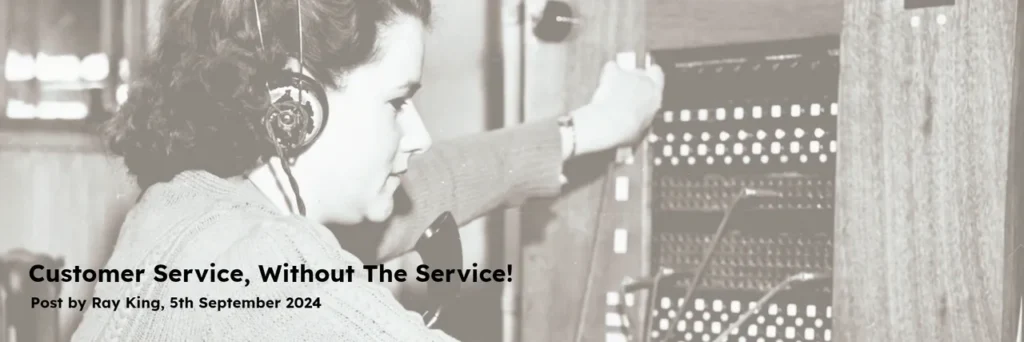
Finding out how to cancel was the first challenge. It was not easy to find, hidden away in their FAQ’s and disappointingly cancellation required a phone call to them, but only between the hours of 10:00 and 4:00. This was the first of many red flags. A lack of faith in a product encourages companies to put barriers in the way of a client cancelling.
I called the next day and the recorded message played as follows.
- To subscribe please press 1
- To upgrade your existing subscription please press 2
- If you wish to discuss the possibility of cancellation please press 3
- For anything else please press 4
Another unnecessary barrier to cancellation.
Note the language – the cancelling option includes “discuss” and “possibility”. Knowing that the majority of their readership are British and avoid discussion, and particularly confrontation, at all costs, this language is no accident. I wonder how many people drop off the call at this point to avoid the conversation.
Undeterred, I duly pressed 3 and was then put on hold for several minutes. Either a deliberate attempt to give callers time to give up and terminate the call or maybe they are so inundated with cancellations their lines were overwhelmed.
Scripts vs genuine customer conversations
Eventually my call was answered, and once I had confirmed that I wished to cancel I explained that I had become disillusioned with their content, finding it biased, littered with errors and poorly written. Consequently I no longer read any of their output and wanted to cancel.
The ‘agent’ told me that she understood my concerns and then went to the next section of her script and told me that she could make me an amazing offer. For the next 6 months I would receive 60% off the subscription allowing me to continue to “enjoy the high quality journalism I had become accustomed to” One of the clearest examples I have witnessed of being blind to what a customer has just said.
I explained again why I was cancelling and she reluctantly agreed. I was told when my subscription would end, that she would make sure my concerns were shared and that I would not need to cancel my payment mechanism as they would not take any more payments. I received an email confirming the same.
Based on my experience so far I was a little cynical so cancelled my direct debit to be on the safe side. I would love to say I was surprised to then receive multiple emails from them asking me to update my payment information as they had not been able to take payment
Finally the left hand and the right started talking to each other.
I stopped getting the payment information messages and instead received a message telling me that I could reinstate my subscription for just £1 per month for the next 4 months, after which it would revert to standard pricing.
Customer service lessons for business leaders
Customers will occasionally cancel subscriptions even if you have the best solution for them. There may be reasons outside of your control, however there is no excuse for not being excellent at the things you can control.
- Have faith in your products – if you don’t, why should your customers?
- Language matters – what you say and how you say it influences how your customers feel about you.
- Hear what is being said – don’t pay lip service to listening. Truly hear and and then check your understanding to make sure you heard correctly.
- Don’t say something will happen unless you are certain it will, or even worse if you know it won’t.
- Don’t have a business model that relies on it being so difficult to cancel that people don’t bother.
- Equally, don’t have a business model that relies on people continuing to pay because they forgot to cancel.
It was unlikely that I would have renewed my subscription in the future but there was always the possibility they would improve their journalistic and editorial standards and maybe then I would have reconsidered. However, having the misfortune of experiencing their ‘service’ I can now say with certainty that I will not be renewing even if they pick up multiple Pulitzers.
Ray
Consult | Assess | Recommend | Execute
Post by Ray King, 5th September 2024