A well-defined Ideal Customer Profile (ICP) is often hailed as the key to sales success in today’s competitive business landscape. While ICPs undeniably serve as crucial components of any successful sales strategy and provide invaluable guidance for targeting and qualification processes, viewing them as a complete solution in isolation represents a significant oversight that numerous companies unconsciously commit. An ICP, despite its importance, works when integrated into a larger, more comprehensive sales framework that encompasses multiple complementary elements and strategic considerations.
Treat your ICP like a compass – it points you in the right direction, but you still need a complete set of navigation tools to reach your destination. Just as a skilled navigator relies on multiple instruments and techniques to chart a successful course, your sales strategy requires more than just directional guidance. Here’s why:
Static vs. Dynamic Market Reality
Markets are in a constant state of evolution and transformation, yet many organisations continue to treat their ICPs as unchanging, fixed documents carved in stone. This disconnect creates a significant misalignment between your strategic sales approach and the ever-shifting reality of today’s business landscape. The consequences of this static mindset can be far-reaching and potentially detrimental to your sales success. Without implementing systematic, regular updates and careful refinements that incorporate real-world feedback, emerging trends, and rapidly changing market conditions, even the most meticulously crafted and thoroughly researched ICP can quickly become obsolete and outdated. This rigid approach to ICPs can result in missed opportunities, wasted resources, and diminished sales effectiveness in an environment.
The Missing Human Element
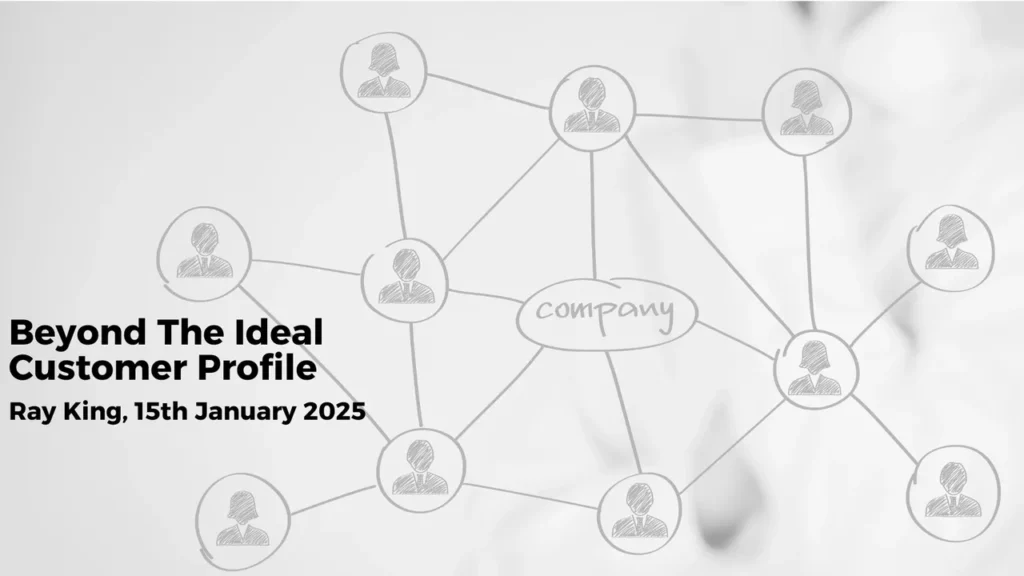
ICPs typically focus on demographic and firmographic data, but they often miss crucial human elements that drive real-world purchasing decisions. Within target companies, there exists a web of interpersonal dynamics that significantly influence how and why purchases are made. These include complex decision-making hierarchies, individual stakeholders’ personal and professional motivations, subtle yet powerful organisational politics, established informal influence networks, and unwritten cultural norms that permeate target companies. Sales professionals who develop a deep understanding of these human elements and their interconnections are better positioned to navigate complex sales environments effectively. Understanding and properly accounting for these human factors can ultimately determine whether a promising opportunity transforms into a successful deal or is lost to a competitor.
Implementation Gaps
Many organisations have excellent ICPs that gather dust and are underutilised and ineffective because they lack the essential infrastructure required for practical implementation. These organisations often find themselves without the necessary combination of specialised tools, comprehensive training programs, and well-defined operational processes that would enable them to transform their ICP into actionable sales strategies. This disconnect between having a well-documented strategy and possessing the capability to execute it effectively creates an impediment to achieving optimal sales performance. Without a structured implementation framework, guidelines for real-world application, and ongoing support systems designed to facilitate proper utilisation, even the most comprehensively researched and expertly developed ICP risks becoming nothing more than an impressive but ultimately ineffective document rather than the powerful, practical sales tool it was intended to be.
Essential Components for Complete Sales Success
To effectively transform your ICP from a static reference document into a dynamic and powerful sales tool that drives real results, you must integrate several key elements into your sales infrastructure. These components work together synergistically to create a comprehensive system that maximises the value of your ICP:
Robust Sales Process Integration
Your ICP should seamlessly connect with and inform every stage of your sales process, from initial prospecting through qualification, engagement, and ultimately closing. This integration ensures that your ICP serves as a practical guide throughout the entire customer journey, helping sales teams make informed decisions at each crucial touchpoint.
Comprehensive Sales Enablement
Equip your team with a complete arsenal of tools, content, and training specifically designed to effectively engage with ICP-matched prospects. This includes customised pitch decks, objection handling guides, case studies, and ongoing professional development resources that align perfectly with your ideal customer characteristics and needs.
Dynamic Feedback Systems
Implement tools and mechanisms to continuously gather, analyse, and incorporate valuable field insights into your ICP refinement process. This creates a living document that evolves with your market, incorporating real-world learning from both successful deals and missed opportunities to maintain peak effectiveness.
Taking Action: Your Next Steps
Audit your current ICP implementation:
- Conduct a comprehensive review of how your sales team integrates the ICP into their daily prospecting, qualification, and engagement activities
- Perform a detailed analysis to identify any discrepancies between documented ICP guidelines and actual sales practices in the field
- Thoroughly evaluate how well your current ICP aligns with evolving market conditions, emerging customer needs, and competitive landscape changes
Evaluate your supporting infrastructure:
- Conduct an in-depth assessment of your CRM system’s capability to track, measure, and report on ICP-related metrics and customer data points
- Perform a comprehensive audit of your sales enablement materials to ensure they effectively support and reinforce your ICP targeting strategy
- Execute a detailed evaluation of your team’s current knowledge gaps and training requirements regarding effective ICP implementation and utilisation
Foster a Feedback-Rich Environment
- Establish regular channels for gathering feedback through post-sales surveys, monthly team debriefings, and systematic win/loss analysis to continuously improve your understanding of customer needs and preferences.
- Implement rigorous data analysis by tracking key performance metrics for ICP matches, documenting success and failure patterns, and monitoring how market changes affect customer profiles.
- Establish clear update protocols by scheduling quarterly ICP review meetings, developing systematic processes for incorporating new insights, and maintaining version control of ICP documents with clear revision histories.
Conclusion
While an ICP undoubtedly serves as a fundamental building block and essential cornerstone of sales success, it ultimately represents just one crucial piece of a much larger and more intricate puzzle that demands careful attention and strategic consideration. True sales excellence and sustainable, long-term growth emerge from the methodical process of carefully constructing and diligently maintaining a comprehensive, well-integrated ecosystem where your well crafted and regularly refined ICP is fully supported by robust operational processes, sophisticated technological tools, and sophisticated continuous improvement mechanisms. Your system should be built to adapt quickly to changing market conditions, customer needs, and industry trends, while staying true to the core direction set by your ICP. The key to maximising the value of your ICP depends not only on creating and documenting it, but also on integrating it into a broader framework that enhances its impact and drives practical application throughout your sales organisation.
Ready to take your sales performance to the next level? Don’t let your ICP gather dust. Let’s collaborate to build a dynamic, results-driven sales framework. Reach out to discuss how we can create actionable customer profiles integrated with comprehensive sales systems and establish feedback loops for continuous improvement.
Ray
The Sales Doctor
Consult | Assess | Recommend | Execute
Post by Ray King, 15th January 2025