For many people, the end of the year is a time when desks are cleared, drawers tidied, and emails filed to allow for a clear focus in the following year. There will be periods of reflection over 2024, what went well and what needs changing, and I would urge you to focus on the controllables when doing that. Apportioning blame for something that didn’t happen in 2024 that was completely out of your control is a thankless and soul-destroying exercise.
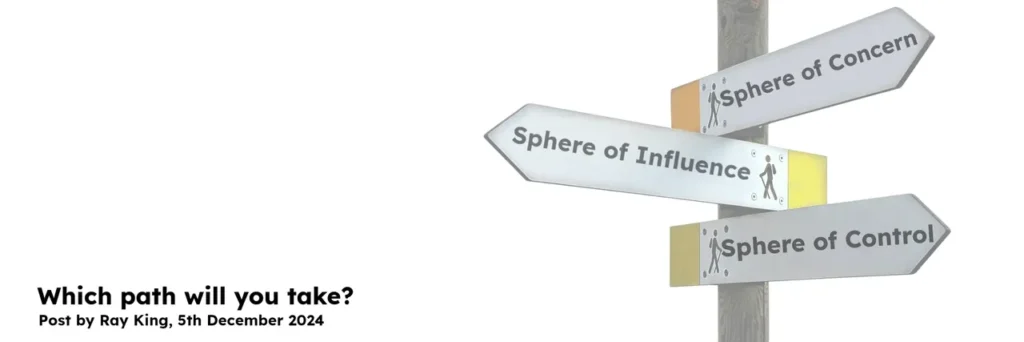
For as long as I can remember, I have applied the Sphere of Control model for both planning and also in the moment when something significant, good or bad, has happened in my life. I am going to give you my take on how I use it in a world filled with constant challenges and uncertainties. Understanding the concept of the Sphere of Control can be transformative for personal effectiveness and mental well-being. As we navigate through life’s complexities, recognising what we can and cannot control becomes essential for maintaining balance and achieving our goals. So let’s start with what it is.
What is the Sphere of Control?
The Sphere of Control is a model that helps us focus our energy and efforts on aspects we can influence, rather than dwelling on factors beyond our control. By understanding this sphere, we can enhance our decision-making processes and boost efficiency.
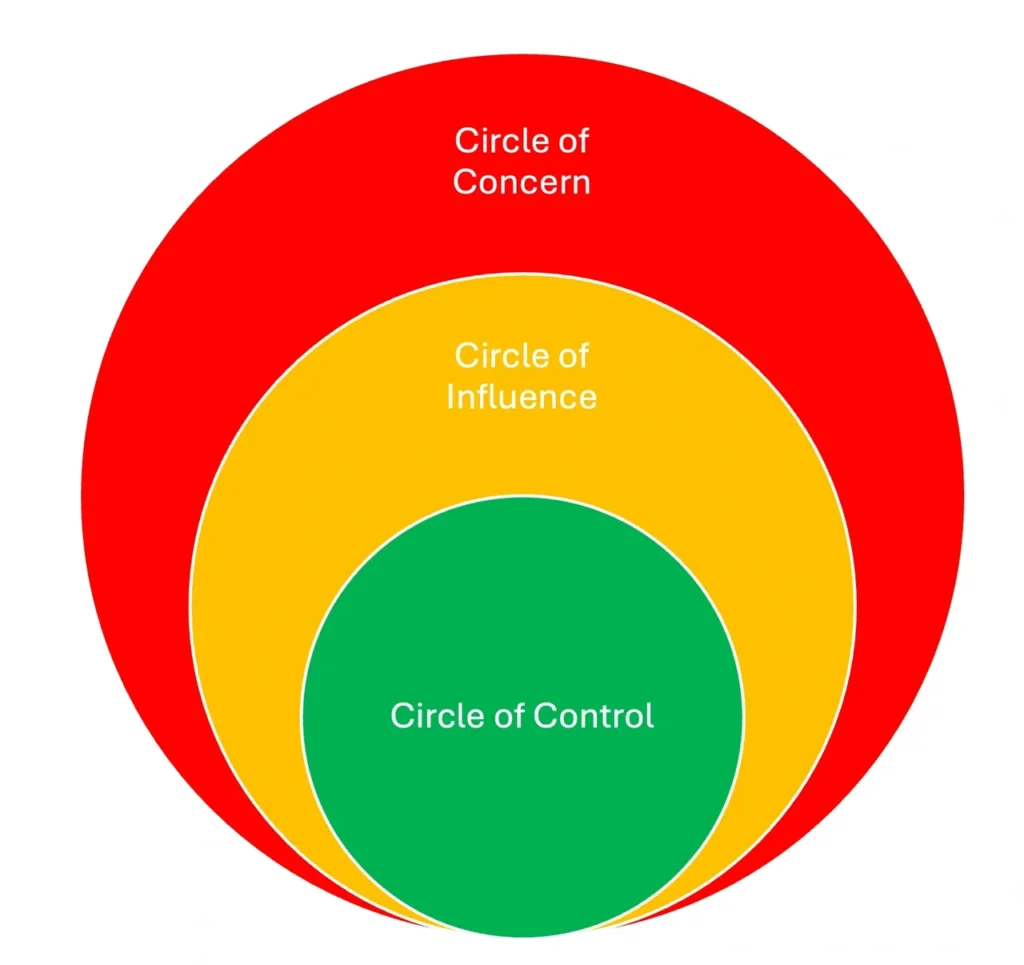
Breaking Down the Sphere:
Control: At the core of the sphere are the elements you can directly affect, such as personal actions, choices, and internal attitudes. Focusing here maximises your potential for change and growth. It also helps remove stress and feelings of helplessness.
Influence: You have no control here, but you do have some sway. This includes relationships, team environments, and community participation, where your input can lead to change over time.
Concern: The outer layer involves elements you have little or no control over, such as global events or distant policy changes. While awareness of these is important, concentrating efforts here often leads to frustration and stress.
The Power of Focusing on What You Can Control
When you concentrate on what you can control, you’ll likely experience reduced anxiety and stress. This isn’t just about positive thinking – it’s about practical effectiveness. By directing your energy toward actionable areas of your life, you naturally become more efficient and purposeful in your decisions.
This focused approach leads to better decision-making capabilities. Rather than feeling overwhelmed by circumstances beyond your control, you’ll develop the ability to identify and act on the aspects of situations where you can make a difference. This mindset shift often results in enhanced emotional resilience, allowing you to better handle life’s inevitable challenges.
Daily Life
Applying this concept to daily life begins with awareness. Start by observing your thoughts and reactions throughout the day. Notice when you’re expending energy worrying about things beyond your control. Then, consciously redirect that energy toward actions and decisions within your sphere of control. This is a learned skill and may not come naturally, but keep at it. It eventually happens naturally without needing to think about it. This ability to reframe a situation from an area of concern or influence to an area of control is key.
Consider your professional life, for example. While you can’t control market conditions or organisational changes, you can control your skill development, work ethic, and professional relationships. In personal relationships, while you can’t control others’ actions or feelings, you can control your own behavior, communication, and boundaries.
Recognising where you are
In general terms, the following is a good indicator of where you are at any given time.
- When you are in an area of Concern, you will be using ‘They’ type language – If only they would do XXX then YYY would be so much better.
- When you are in an area of Influence, you will be using ‘We’ type language – If only we could do XXX then YYY would be so much better.
- But when you are in an area of “Control” then you will be using ‘I’ type language – I am going to do XXX so YYY will be better.
Moving it from concern to control in a sales environment might look something like:
‘If only my prospects would answer my phone calls’ can be reframed as ‘I am going to improve the quality and quantity of my phone calls’
A very personal example of this is when my Dad told me he had terminal cancer. Initially I was very much in an area of concern with thoughts and energy spent on “Why him?” and “It isn’t fair”. Pretty soon though I was able to reframe my thoughts to how do I make the most of the time we still have together. I committed to spending as much time as I could with my Dad and we had some of the best moments in the final year or so of his life. We talked endlessly about his early life growing up, his life in the army, how he met my Mum. The outcome was going to be the same, and I could have spent that time angry and bitter, but instead I was able to savour and enjoy that time, and I will always look back with enormous fondness on that time spent together.
Remember that while you can’t control everything, you always have control over how you respond to life’s challenges. This awareness isn’t about limiting yourself – it’s about empowering yourself to focus on what truly matters and where you can make a real difference.
The key to success lies in regularly reflecting on your actions and choices, understanding their alignment with your goals, and making adjustments as needed.
So as you reflect on 2024 and plan for 2025, don’t waste time and energy on the areas of Concern. Don’t ignore them entirely, but work out how to reframe them to areas of Control such as: How many dials will you make? Is your sales process optimised and still relevant for today’s market? Does your collateral tell your story? Is your messaging right for your audience?
This model is nothing new, it has been applied for hundreds of years.
“There are things that are within our power, and things that fall outside our power. Working within our sphere of control, we are naturally free, independent, and strong”
Epictetus (55-135 AD)
Ray
The Sales Doctor
Consult | Assess | Recommend | Execute
Post by Ray King, 5th December 2024