
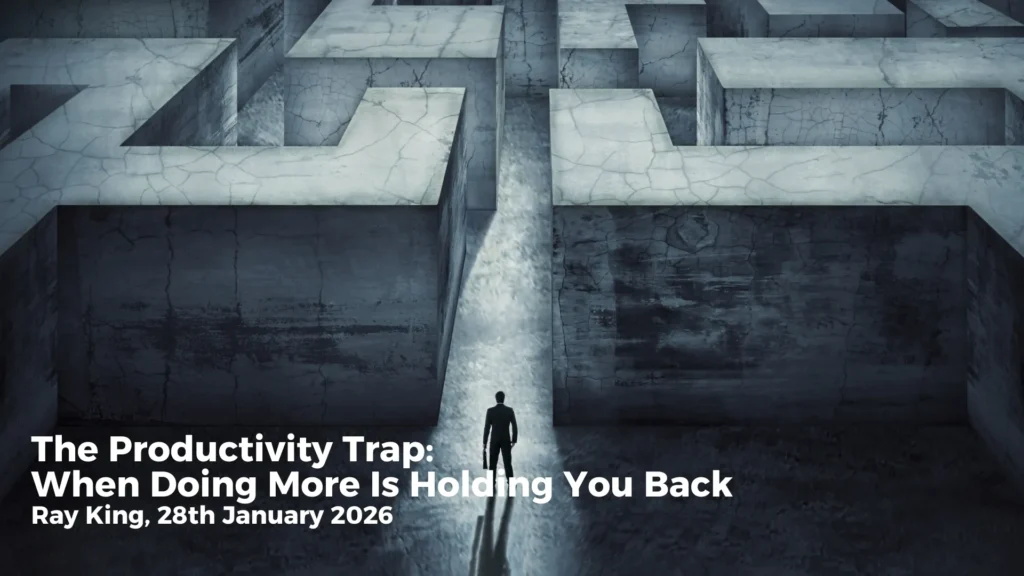
Sales has long been a profession that celebrates visible effort, rewarding those who appear relentlessly active with full calendars, high activity metrics, and the reassuring sense that something is always happening, even when tangible results lag quietly behind. Calls are logged, emails are sent, CRM systems are meticulously updated, meetings are booked, and pipelines are “worked,” creating a steady rhythm of motion that feels productive and responsible. This article looks at busy vs productive in sales.
This emphasis on activity is understandable, particularly in a role where outcomes are delayed and often influenced by factors beyond an individual’s control, but it also creates an environment in which busyness is easily mistaken for effectiveness. Activity is easy to measure, easy to report, and easy to praise, whereas progress is often subtle, uneven, and uncomfortable to assess in real time.
Over time, this imbalance conditions sales professionals to prioritise motion over momentum, not because they lack ambition or discipline, but because the system itself signals that being busy is safer than being exposed to uncertain outcomes. In such environments, effort becomes a proxy for value, and staying active becomes a way of protecting both reputation and self-belief when results feel fragile.
When Productivity Becomes a Form of Avoidance
Avoidance in sales rarely looks like disengagement or procrastination, which is why it often goes unnoticed, and instead tends to present itself as preparation, optimisation, or diligence. It shows up as spending extra time refining CRM notes before reaching out, conducting extensive research before making a call, tweaking messaging repeatedly before testing it live, or delaying a difficult conversation until confidence feels higher.
Each of these behaviours can be useful and appropriate in moderation, but problems arise when they become habitual substitutes for action rather than support for it. When preparation continually delays engagement, when planning replaces conversation, and when optimisation becomes endless, activity stops serving progress and begins to serve comfort.
This pattern is particularly common among capable and conscientious sales professionals who care deeply about doing good work and maintaining high standards, because the desire to show up well can quietly turn into a reluctance to show up at all unless conditions feel just right. Sales, however, rarely rewards readiness or perfection, and instead moves forward through presence, responsiveness, and the willingness to engage before everything feels resolved.
Busywork offers emotional relief by creating the illusion of control and competence, allowing salespeople to feel productive without exposing themselves to rejection, ambiguity, or the possibility of getting something wrong. In this way, productivity becomes a socially acceptable form of avoidance, one that feels justified and even responsible.
The Emotional Cost of Hiding in Activity
While busywork offers short-term relief, it carries a longer-term emotional cost that often goes unrecognised until confidence has already begun to erode. Confidence in sales is not built through preparation alone, but through evidence, and evidence is created through experience, feedback, rejection, adjustment, and recovery. When exposure decreases, learning slows, and confidence quietly fades, even as effort increases.
Many sales professionals recognise this pattern not through obvious failure, but through a persistent sense of dissatisfaction at the end of the day, feeling exhausted yet uncertain about what genuinely moved forward. The calendar was full, the tasks were completed, and yet the most important conversations remain untouched, leaving a subtle sense of stagnation beneath the surface.
Over time, this effort-without-progress dynamic contributes to burnout, not because salespeople are unwilling to work hard, but because hard work that lacks meaning and momentum gradually drains motivation. Sales professionals rarely burn out from effort alone; they burn out from feeling busy without feeling effective, engaged without feeling impactful.
This emotional toll can also reshape identity, leading individuals to question their confidence or capability, when in reality they have simply reduced their exposure to the very situations that build resilience and skill.
Learning to Recognise the Signs Before They Stall You
The warning signs that activity has become avoidance are rarely dramatic and tend to show up as patterns that seem reasonable until examined honestly. Spending more time organising than engaging, feeling relieved when meetings cancel, defaulting to emails when a conversation would be faster, endlessly refining messaging without testing it, or knowing exactly what the next meaningful action is and repeatedly postponing it are all subtle indicators that motion may be replacing momentum.
These behaviours are not failures of character or commitment, but normal human responses to emotional friction, particularly in environments where performance is constantly evaluated and outcomes feel personal. Avoidance thrives in ambiguity, where the absence of clarity allows activity to expand and fill space without resolution.
One of the most useful questions a sales professional can ask is not “What else can I do?” but “What am I avoiding right now?” because it shifts the focus from effort to honesty, often revealing that the avoided action is small but emotionally charged, such as asking for a decision, re-engaging a stalled opportunity, addressing pricing directly, or accepting that a deal is no longer viable.
Choosing Momentum Over Motion in Your Sales Work
Discomfort in sales is not a sign that something is wrong, but often an indication that something important is at stake, pointing directly towards growth, learning, and progress. Rather than trying to eliminate discomfort, effective sales professionals learn to interpret it as information, using it to guide their attention towards the conversations and decisions that matter most.
Choosing momentum over motion does not mean working less, but working more honestly, by prioritising actions that create clarity and movement even when they feel uncomfortable in the moment. It means measuring success not by how full your calendar is, but by how clear your pipeline feels, and recognising that confidence is built through action rather than before it.
Sales ultimately rewards bravery far more than busyness, and if your days are full but your progress feels thin, it may be worth examining whether activity has quietly become avoidance, not as a criticism, but as an opportunity to reclaim choice, direction, and momentum in your work.
Lost deals are an inevitable part of sales, but allowing them to quietly drive avoidance and self-doubt doesn’t have to be. If you’d like support building a healthier, more resilient sales mindset that values clarity over busyness, get in touch.
The Sales Doctor
Consult | Assess | Recommend | Execute
Post by Ray King, 28th January 2026